
AI workshop for teams: what actually happens in one
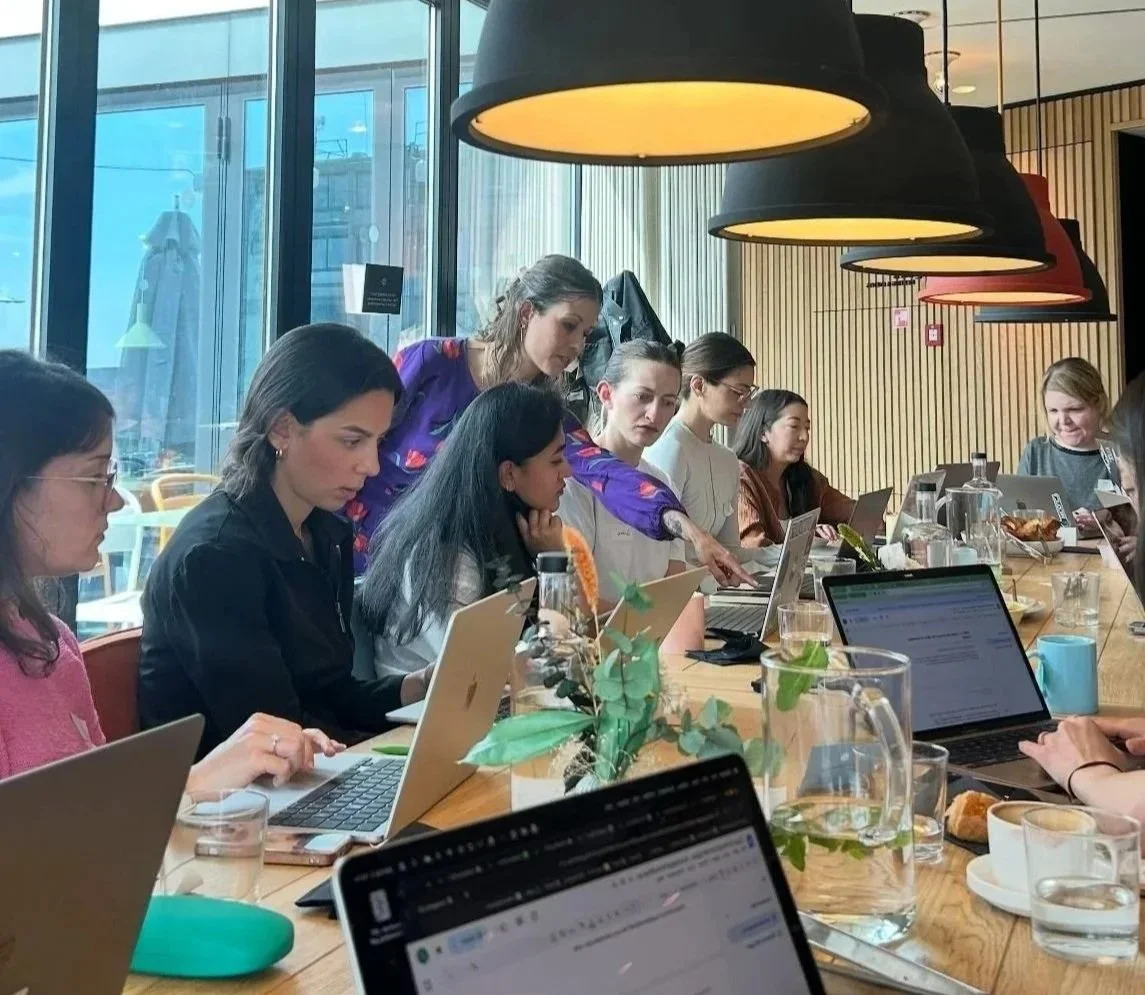
An AI workshop for teams is a hands-on session, usually two to four hours, where your people learn to use AI on their own real work: their actual emails, reports, spreadsheets, and recurring headaches. Not a lecture about the future of technology. Not a demo where one enthusiastic person types while everyone else checks their phone. Everyone’s hands on keyboards, everyone leaving with something they built that morning.
I run these, so I’ll just show you the inside.
The first thirty minutes: clearing the fog
Every team arrives with the same invisible baggage. A few people use ChatGPT daily and feel smug about it. A few tried it once in 2023, got a bad poem, and quietly decided AI wasn’t for them. Most sit somewhere in the middle: curious, slightly guilty they haven’t “learned AI” yet, unsure what that would even mean.
So we start by lowering the temperature. I explain what these tools actually are and what they’re genuinely bad at, in plain language, with zero jargon. I tell them how I built Gut Goddess, my gut health app, with AI and not a single engineer, including the part where a bug ate three days of my life because I trusted the machine a little too enthusiastically. The room relaxes. If the workshop leader has been publicly humbled by this technology, nobody has to pretend to be an expert.
That honesty is not a warm-up trick. It’s the foundation. People don’t learn while they’re busy protecting their ego.
The middle: your work, not example work
Before the session I collect real tasks from the team. The report someone rebuilds every Monday. The customer complaints that take forever to answer well. The proposal template everyone hates.
Then we do those tasks. Live, together, with AI.
This is where the a-ha moments happen, and they’re weirdly personal. The operations lead who watched a two-hour reporting task collapse into fifteen minutes went silent, then said “I need a moment.” The marketing manager discovered she could paste ten pages of survey responses and get themes in seconds. Someone always tries to break the AI, which I encourage, because watching it fail teaches judgment faster than watching it succeed.
We also cover prompting properly at this stage: context, examples, format, asking the model to check itself. But taught through their tasks, not slides. A prompting principle you used on your own annoying spreadsheet sticks. One you saw on a slide evaporates by Thursday.
The last hour: making it stick
A workshop that ends at the applause is a wasted afternoon. So the final stretch is about Monday morning.
Each person picks one workflow from the session and we make it repeatable: a saved prompt, a custom assistant, a simple checklist. The team agrees on a few ground rules together, like what data never goes into public tools and how AI-drafted work gets reviewed. If leadership is in the room, and they should be, we talk honestly about expectations, because “we did a workshop” and “we work differently now” are separated by exactly this hour.
I also leave homework. Small, specific, slightly fun homework. People roll their eyes and then do it, and that’s when the change actually lands.
What a team walks out with
Concretely: three to five working AI workflows built on their real tasks, a shared vocabulary so “just ask the AI” stops being a vague suggestion, a set of safety ground rules, and, this one matters most, calibrated confidence. Not hype. Not fear. A grounded sense of “I know what this tool is for, and I know when to double-check it.”
Teams tell me the strangest benefit is cultural. Once everyone’s played with AI together, badly, in a safe room, the shame around not knowing dissolves. People start sharing prompts in Slack like recipes.
FAQ
How long is a typical AI workshop for teams?
Half a day is the sweet spot: long enough to build real workflows, short enough that nobody’s brain leaks out. Some teams book a full day or a series of shorter sessions. Under two hours you get inspiration but not habits, and habits are the point.
Do participants need any technical background?
None. Truly none. My best workshop students have been the self-declared “not tech people,” because they arrive with zero bad habits and very real problems to solve. If your team can write an email, they can do everything in the session.
How many people should attend an AI workshop?
Eight to fifteen is ideal: small enough that everyone gets individual attention on their tasks, large enough that different roles cross-pollinate. Bigger groups work with adjusted formats. Mixed seniority helps, and leadership in the room changes what happens afterwards.
Read more about the AI workshops I host.
——
If your team is somewhere between AI-curious and AI-guilty, that’s exactly who these are for. Reach out through my contact page and tell me what your team actually does all day. We’ll build the workshop around that, and I promise nobody will have to watch a slide about the future of work.

