What is prompt engineering (and do you actually need it in 2026)?
Prompt engineering is the practice of writing instructions to an AI in a way that reliably gets you the result you want. That’s it. It sounds like a job title invented by someone with a LinkedIn premium subscription, and for a while it kind of was, but underneath the buzzword sits a real skill: knowing how to tell a very capable, very literal assistant exactly what you need.Do you need it in 2026? Yes and no, and I’ll be specific about which parts.
 Rafaela BuenaUpdated 4 min read
Prompt engineering is the practice of writing instructions to an AI in a way that reliably gets you the result you want.
That’s it. It sounds like a job title invented by someone with a LinkedIn premium subscription, and for a while it kind of was, but underneath the buzzword sits a real skill: knowing how to tell a very capable, very literal assistant exactly what you need.
Do you need it in 2026?
Yes and no, and I’ll be specific about which parts.
What prompt engineering actually means
When ChatGPT first exploded, people discovered that the same question phrased two different ways produced wildly different answers. Ask “write me a marketing email” and you get beige. Ask “write a 120-word email to busy women who already know my product, warm tone, one clear ask, no exclamation marks” and suddenly the machine behaves.
Prompt engineering grew out of that gap. It covers things like giving the AI context about who you are, telling it the format you want, showing it examples of good output, and asking it to think step by step before answering. None of this is engineering in the bridges-and-blueprints sense. It’s closer to briefing a freelancer.
A very fast, slightly overconfident freelancer who never sleeps.
What changed between 2023 and now
The models got dramatically better at guessing what you meant. In 2023 you needed magic phrases and elaborate role-play setups (“you are a world-class copywriter with 20 years of experience..”) just to get decent output. In 2026, the models fill in a lot of blanks on their own. The exotic tricks matter less. The fundamentals matter more.
I learned this building Gigi, my AI gut health companion for women, with AI and zero engineers. Not one. When my prompts were vague, I paid for it in redos. Eleven redos on one feature, at my personal record, because I kept saying “make it feel friendlier” instead of describing what friendly meant on an actual screen. The model wasn’t failing. My brief was.
So the skill didn’t die. It just moved from incantations to clarity.
The three habits that still pay off
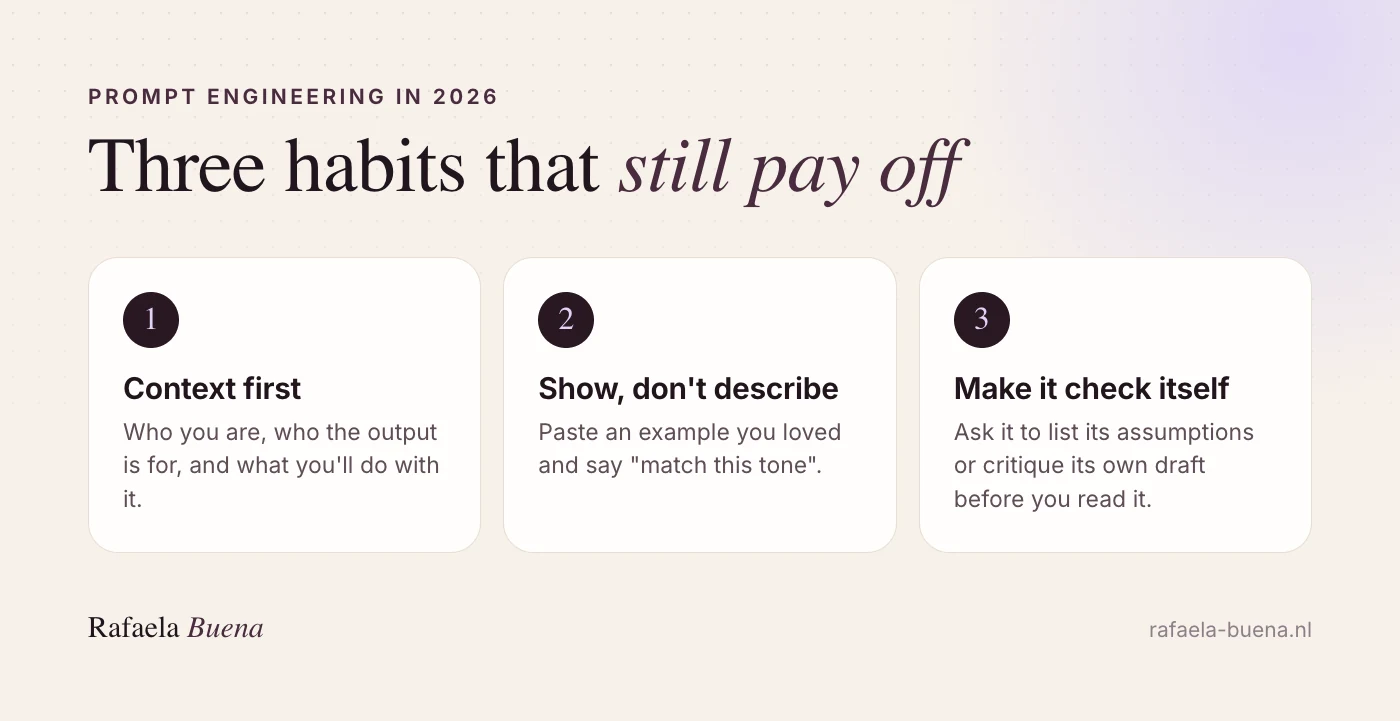
If you keep only three things from the entire prompt engineering universe, keep these.
Context first. Tell the AI who you are, who the output is for, and what you’ll do with it. “I run a two-person studio, this email goes to lapsed clients, I want them to book a call” beats a paragraph of adjectives.
Show, don’t describe. Paste an example of something you loved and say “match this tone.” One good example outperforms ten instructions about voice. I keep a folder of my own best writing exactly for this.
Make it check itself. Ask the AI to list its assumptions, or to critique its own draft before you read it. This one habit catches most of the confident nonsense before it reaches you.
Notice what’s missing: no secret keywords, no prompt templates you have to buy from a stranger on the internet. Good news for your wallet.
So, do you need it?
You do not need a prompt engineering certificate, a course with a countdown timer, or a 400-prompt PDF bundle.
You do need the underlying skill, which is really the skill of delegating clearly. If you’ve ever briefed a designer, onboarded an assistant, or explained a recipe to a partner who “helped” in the kitchen, you already have the raw material. The people who get the most out of AI in my workshops are rarely the most technical ones. They’re the ones who know what they want and can say it plainly.
That’s learnable. Usually in an afternoon, honestly, with someone pointing at your actual prompts and saying “here, this word is doing nothing.”
FAQ
Is prompt engineering still a real job in 2026?
As a standalone job title, mostly no. As a skill folded into other jobs, absolutely yes. Marketers, founders, operations people, and writers who prompt well simply produce more, faster. Companies stopped hiring “prompt engineers” and started expecting everyone to prompt competently.
How long does it take to learn prompt engineering?
The fundamentals take a few hours of deliberate practice: context, examples, format, self-checks. Getting fluent takes a few weeks of using AI on your real work rather than test questions. It’s much closer to learning to write a good brief than learning to code.
What’s the biggest prompt mistake beginners make?
Being vague and then blaming the model. “Make it better” is not a prompt, it’s a wish. Say what better means: shorter, warmer, aimed at whom, in what format. The second biggest mistake is accepting the first answer instead of pushing back like you would with any collaborator.
———
I teach this stuff for a living now, usually to people who swore they weren’t “AI people” until about forty minutes in. If you want to skip the trial and error I paid for, book a 1-1 AI session with me, or bring your whole team and we’ll do a workshop. Everything starts at my contact page. I’m glad you asked :) For teams, see AI workshops for teams, including the Prompt Engineering Masterclass.
Keep reading
All posts
3 min readGuest post by Yann Ghisalberti
Outsourcing your executive functions: how AI helps when you have ADHD and run out of mental energy
If you have ADHD, your brain doesn't struggle with ideas. It struggles with the invisible steps between the idea and the first sentence. A guest post by ADHD coach Yann Ghisalberti on three ways AI can carry that load.
Read the post
6 min read
How I use Claude to run my social media and clean up my digital life (a real week, no code)
Last week I handed Claude my social media, my old TikToks and my messy folders. I’m not an engineer. Here’s exactly what it did, what went wrong, and how you can start.
Read the post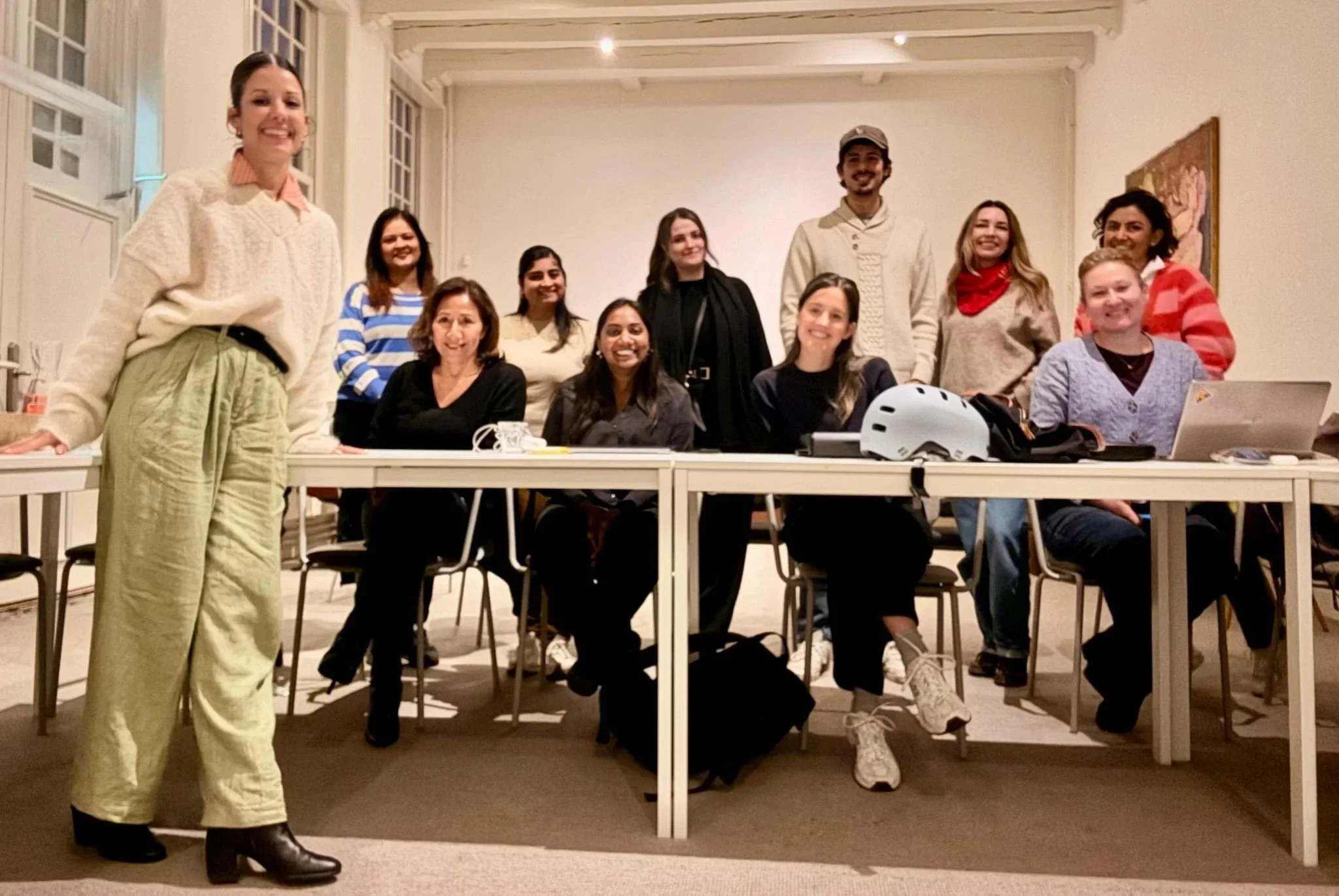
4 min read
How to choose an AI trainer for your team: 9 questions to ask
Hiring an AI trainer or AI workshop for your team? Nine questions that separate training people actually use from a slide deck they forget by Friday.
Read the postOnline course · opens December