
"It’s just IBS" vs. "it’s just PMS": what Helene Choo taught us about PMDD and the gut
"It's just IBS." "It's just PMS." Most women I know have heard one of those sentences. Many of us have heard both. At Tummy Talks No. 1, our storyteller Helene Choo took the seat and showed us what happens when you put them side by side.
Helene spent years treating her body as the problem. Her story was about what her body was really doing in the week before her period, and what changed once she stopped reading those days as proof that something was wrong with her. Today she runs Moon Quest, a cycle-aware app and guided journal for people with PMS, PMDD and PME.
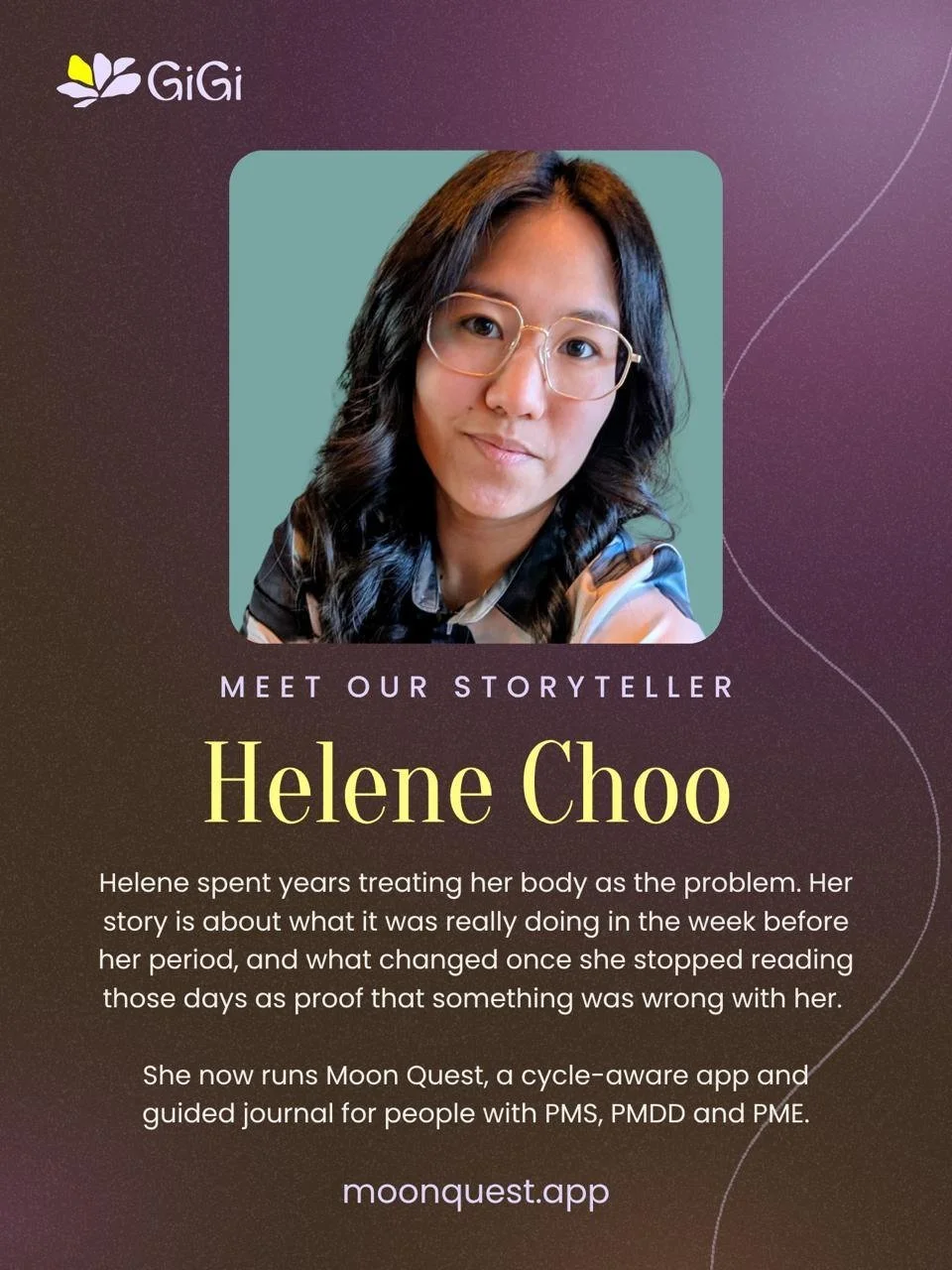
Meet our storyteller: Helene Choo
Storyteller at Tummy Talks No. 1 and founder of Moon Quest, a cycle-aware app and guided journal for people with PMS, PMDD and PME.
What is PMDD?
PMDD, or premenstrual dysphoric disorder, is a severe, cyclical condition linked to the menstrual cycle. In the days before a period, people with PMDD can experience intense mood changes, such as depression, anxiety, irritability or feeling out of control, together with physical symptoms. The symptoms ease once the period starts, and then the cycle repeats. It is not "a bit of PMS", and it is not in your head.
PME, premenstrual exacerbation, is related but different: an existing condition gets noticeably worse in the premenstrual phase. Many people only discover these words after years of trying to explain what they feel.
Now add the gut
Helene shared four ideas that stayed with everyone in the room:
Gut and menstrual issues carry a double stigma. Both are still taboo, and both are dismissed most often in people assigned female at birth.
Tummy symptoms and premenstrual flare-ups feed each other. Bloating, pain and changes in digestion often get worse in the days before a period, and feeling unwell in your gut does not make the premenstrual days any easier.
Each symptom gets its own specialist. Gut issues? See a gastroenterologist. Cycle issues? See a gynaecologist. Mood? That is another referral. Nobody is looking at the whole picture.
"It's just IBS" vs. "it's just PMS". Two labels that are often used to close the conversation instead of starting it.
That evening, the storytellers who took the seat had been dealing with their symptoms for years, many of them for a decade or more. The word "just" had followed almost all of them.
Three waiting rooms, one body
This is the part that hit me hardest. When your gut, your cycle and your mood are all connected, but each one lives in a different waiting room, you become the only person who can connect the dots. You carry the history from appointment to appointment. You try to remember which week it got worse. You start doubting yourself.
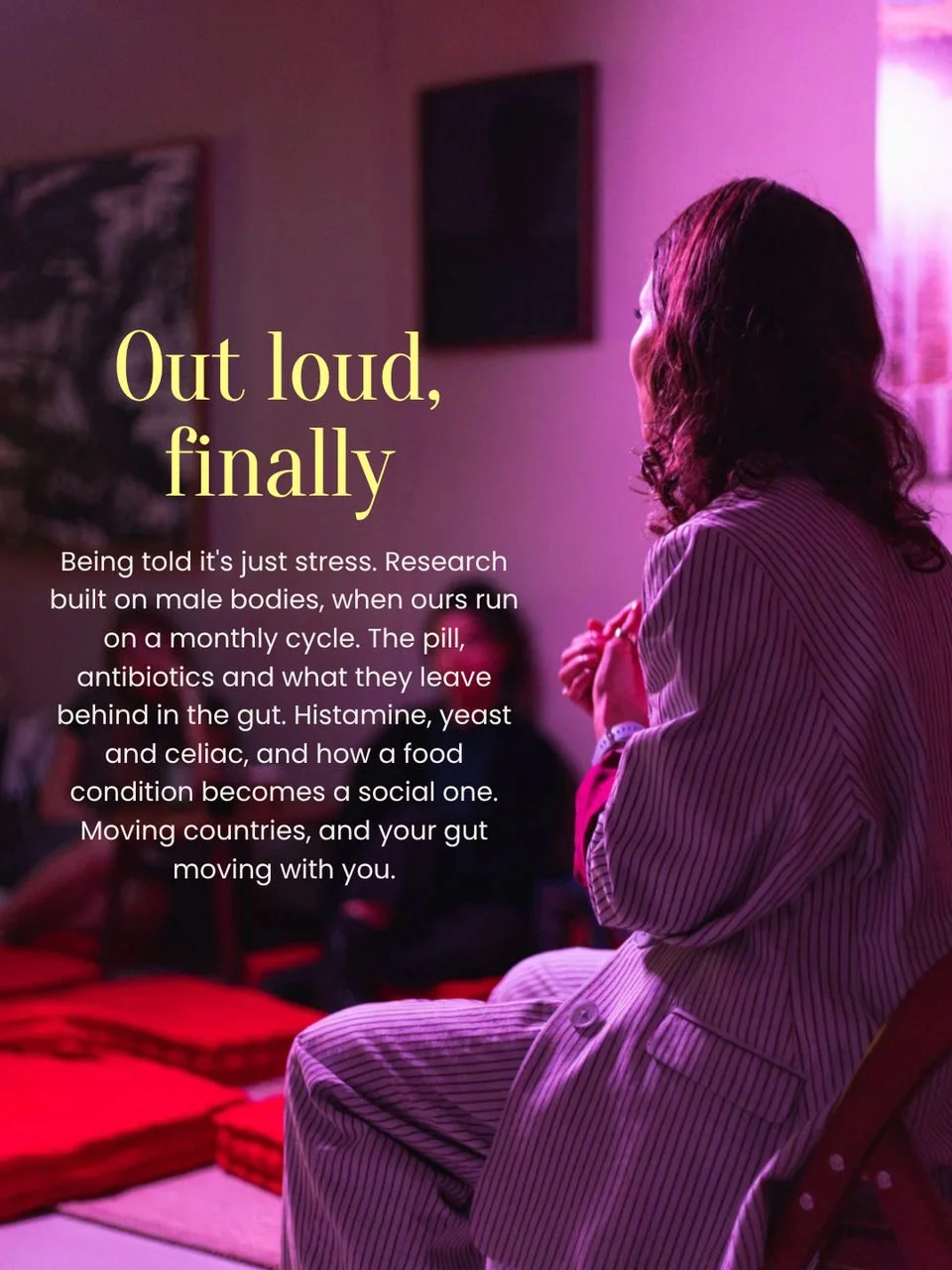
Out loud, finally
Being told it is just stress. Research built on male bodies, when ours run on a monthly cycle. Some of what we said out loud at Tummy Talks No. 1.
That is exactly why I'm building Gigi, an AI gut health companion for women. Gigi listens, remembers and helps you see your patterns over time, including how your symptoms move with your cycle, so you can walk into your next appointment with a clear story instead of guesses. Gigi doesn't replace your doctors. She helps you show up to them with the whole picture.
Thank you, Helene
Thank you, Helene, for saying it out loud, and for giving so many women in that room words for something they had felt for years. If you are organising an event and want a storyteller on gut health, PMDD and cycle awareness, reach out to Helene on LinkedIn.
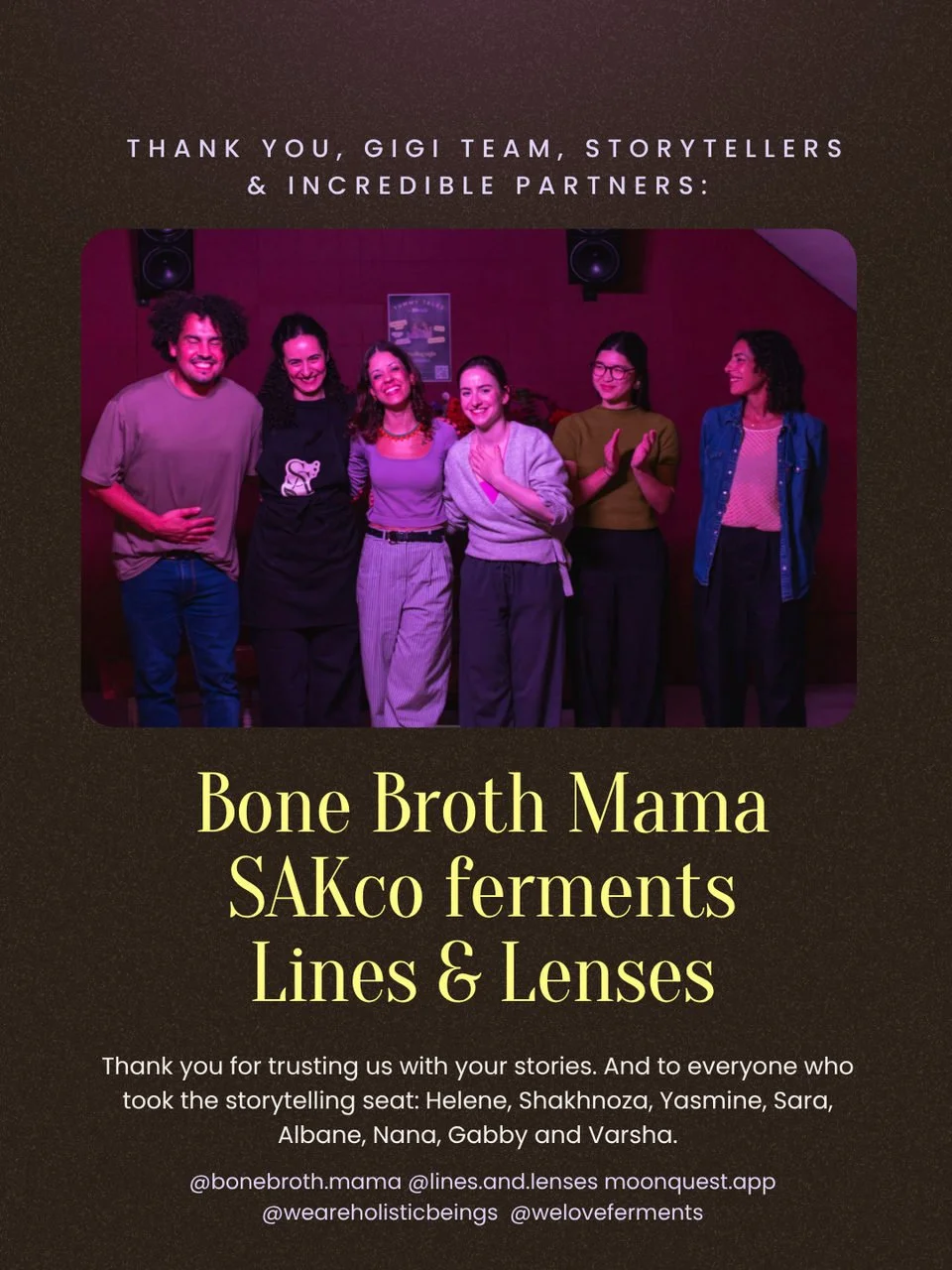
The storytellers of Tummy Talks No. 1
Helene and the women who took the seat with her, each with ten or more years of story to tell.
Want to be in the room next time? Join the list for the next Tummy Talks, and you'll also save your place on the Gigi waiting list. Read more about why we started Tummy Talks.
Rafaela Buena, founder of Gigi
This article shares personal stories and general information, not medical advice. If something is worrying you, please see a healthcare professional who can examine you. Photos by Val, Lines & Lenses.
